Indication for Use :It is indicated for the embolization of lesions in the peripheral and neurovasculature, including arteriovenous malformations(AVM) and hypervascular tumors
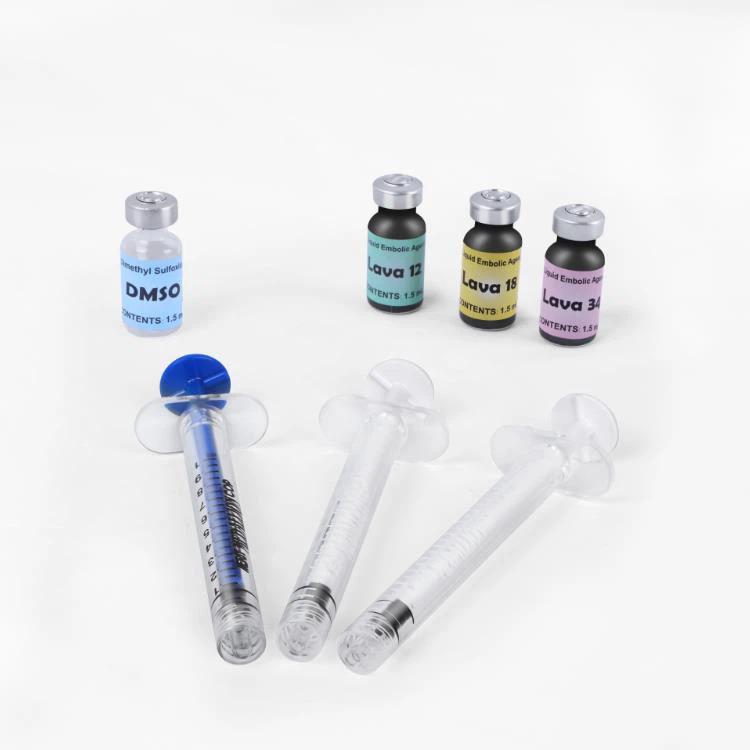
Models:LAVA-12, LAVA-18, LAVA-34
LavaTM Peripheral Liquid Embolic System (PLES) is a minimally invasive procedure that is used to block blood flow to a vascular abnormality like a tumor or malformation. A liquid embolic agent, comprised of a dissolved substance and a polymer, is delivered through a catheter to a targeted blood vessel. The polymer in the embolic agent solidifies once in contact with blood, forming a permanent blockage of the targeted vessel. The EVOH copolymer, a recent advancement in pLES technology, brings notable pros to the table. This system utilizes innovative liquid embolic materials that are specifically designed to target and block blood vessels, thereby reducing the flow of blood to the affected area. One of the key benefits of peripheral liquid embolic system is that it can be used to treat a wide range of peripheral vascular conditions, including those that affect the lungs, liver, spine, and brain. Additionally, it has been found to be highly effective in treating patients with comorbid conditions, such as underlying heart or lung disease.
Features &Advantages
1. The EVOH copolymer is a non-adhesive polymer that prevents the undesired adhesion of the liquid embolic agent to the catheter walls. This minimizes the risk of unforeseen blockages and ensures that the entire intended volume of the liquid agent is successfully delivered to the targeted vessel. Moreover, this non-adhesive property expands the physician’s ability to perform technically challenging procedures and makes pLES a considerably safer procedure.
2. Comprehensive degrees of viscosity, LAVA-12, LAVA-18 and LAVA-34. This feature enables peripheral liquid embolic system to accommodate various clinical requirements, making it an excellent option for medical professionals and patients alike.
3. PLES also offers better permeability into the nidus and surrounding tissues. This is due to the microspheres or liquid embolic agents used in PLES, which have a higher degree of biocompatibility than traditional embolic agents. This means that they are less likely to cause inflammation or tissue damage, and can be more easily absorbed by the surrounding tissues. This results in a more complete embolization that covers the entire nidus, reducing the risk of recanalization and recurrence of the vascular lesion.
4. Tantalum powder has excellent visibility under fluoroscopy. This makes it easier for the physician to visualize and track the embolic agent during the procedure. This is important because it allows the physician to precisely control the placement of the embolic agent and ensure that it is blocking the correct vessel. This excellent visibility is due to the high atomic number of tantalum, which means that it absorbs more X-rays compared to other materials that are used for embolization. The high visibility of tantalum powder significantly reduces the risk of unwanted embolization.