Multi-patch Superposition Technology (MPST)
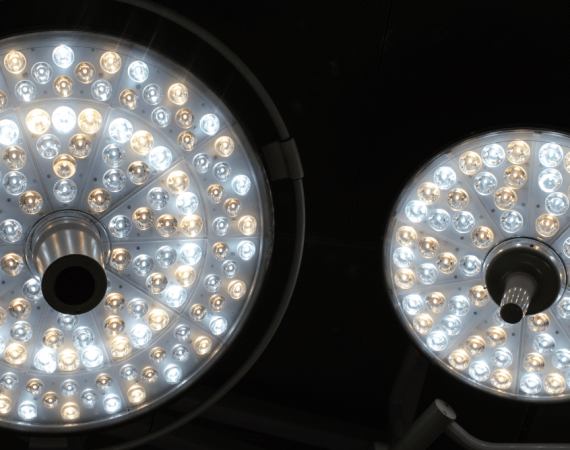
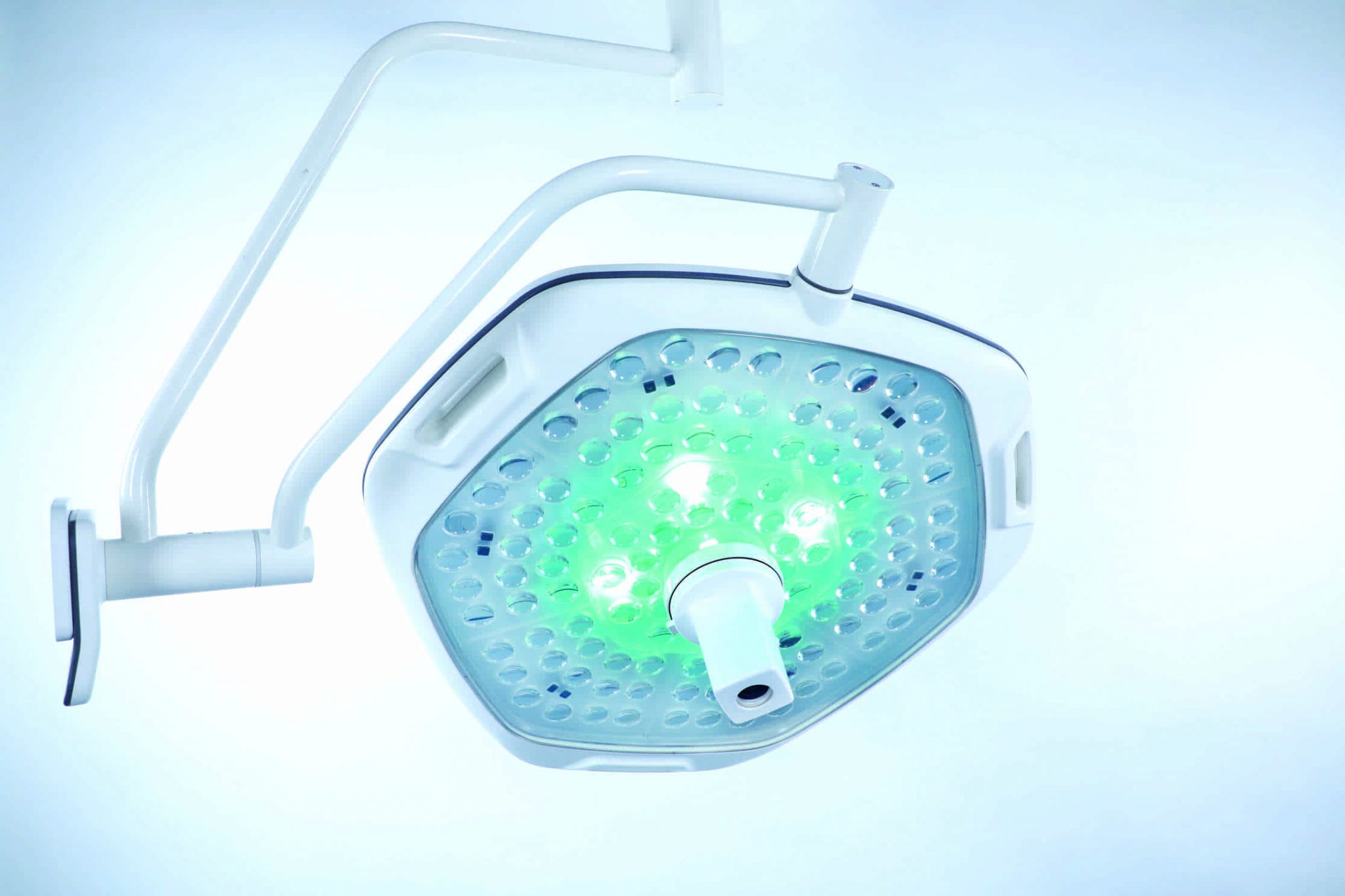
The HyLED X Series adopts the new Multi-Patch Superposition Technology (MPST) through the innovative lens group design to create a clear and homogeneous light field, even when it’s obstructed by up to 80%. The light has 24 groups of lens. Each individual group forms a complete patch and gets superimposed to contribute to a uniform light beam on the operating field.
An ultra-small light field with a minimum 14cm area can be achieved to meet the specific needs of certain surgeries.
-iRelax™ to reduce eye fatigue
During a surgical procedure, medical staff continue working under high-intensity surgical lights, causing intraoperative visual fatigue and increasing the chance of surgical errors. The iRelax feature of the HyLED X Series offers eye-relaxing light and smooth brightness adjustments to effectively reduce doctors’ sensitivity to the illumination and relieve their eye strain.
-Eye-relaxing light
Creating a gradual transition of light intensity between the illuminated surgical area and ambient lighting in the operating theatre.
-Smooth brightness
Providing a smooth illuminance pattern that helps doctors adapt visual acuity as per Weber’s law when the surgical lights are switched on or off.
-Color temperature
Adjustable color temperature helping doctors accurately differentiate various tissue types during surgery.
Ease-of-use UI design
User-centered designs make it easy to adjust illumination and light field to different clinical needs. Quick switchover between 6 different illumination modes increases the efficiency of the surgical workflow, and allows doctors and nurses to always stay focused on their patients.
• Multifunctional handle with special sensor design
• Low resistance joint design
• Specialized illuminance modes
-Cardiac surgery
-Deep cavity surgery
-Superficial surgery
-Spine surgery
-Gynecologic/Urologic surgery
-General practice
-Low resistance joint design
-Specialized illuminance modes
-Quick lock system for the camera
-Multifunctional handle with special sensor design