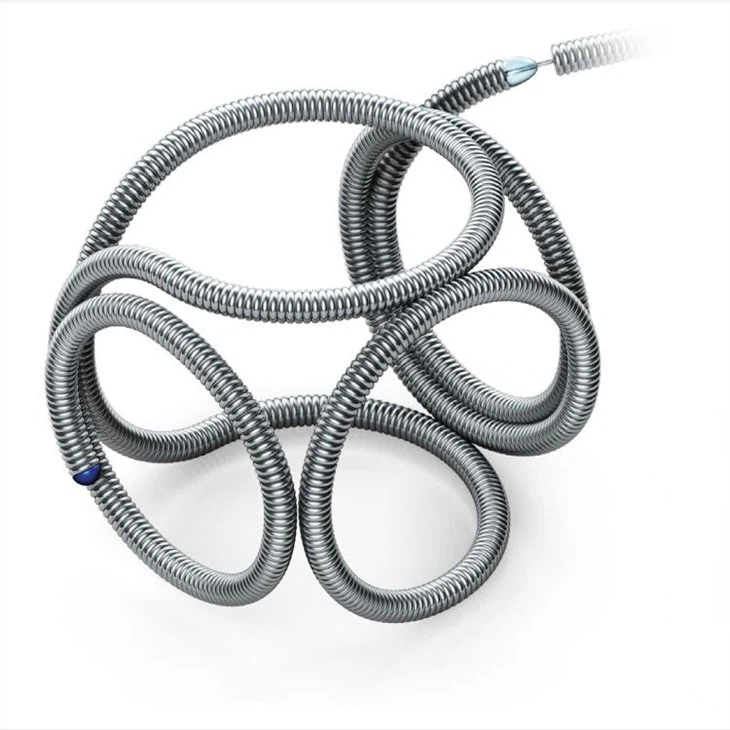
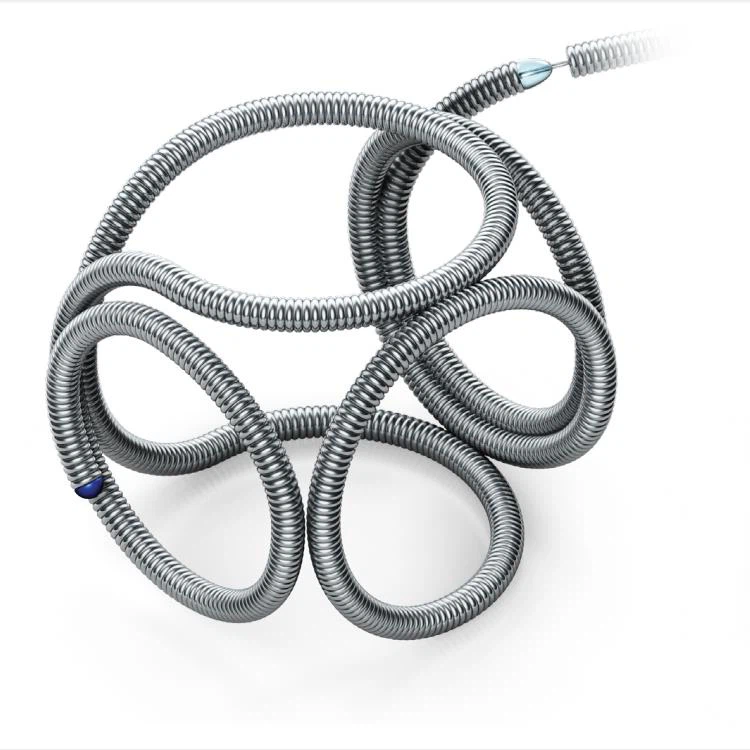
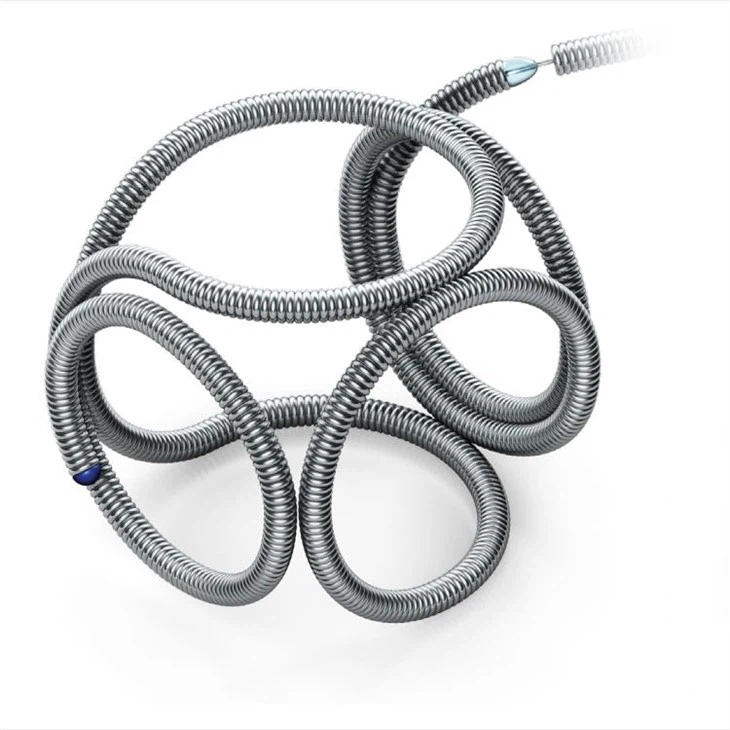
The RenovaTM Intracranial Coiling is intended to endovascularly obstruct or occlude blood flow in vascular abnormalities of the neurovascular and peripheral vessels.
RenovaTM Intracranial Coiling a highly advanced, minimally-invasive medical procedure used to treat a number of conditions related to the blood vessels in the brain. This innovative technique involves the use of tiny metal coils that are inserted into the affected blood vessel in order to stop blood flow and prevent further damage. The coiling procedure begins with the insertion of a thin tube, or catheter, into the patient's femoral artery. This catheter is then guided up through the body until it reaches the affected blood vessel in the brain. Once in position, the doctor carefully inserts the coiling device through the catheter and into the blood vessel. The intracranial coiling device is made up of a series of tiny metal coils that are tightly wound together. Once inserted into the blood vessel, the coils are released and expand, forming a tight mesh that covers the affected area and prevents blood flow. The body's natural healing processes then take over, sealing off the affected blood vessel and preventing any further damage.
Intracranial coiling is a highly effective treatment option for a number of conditions, including cerebral aneurysms and other forms of intracranial vascular malformations. It is also commonly used to treat subarachnoid hemorrhages, a type of bleeding that occurs between the brain and the tissue that covers it. One of the greatest advantages of intracranial coiling is its minimally-invasive nature. Unlike traditional surgical procedures, which often involve large incisions and extended hospital stays, coiling is performed using only a small incision. This means that patients experience less pain and discomfort, and are able to recover more quickly. Another key benefit of intracranial coiling is its high success rate. Studies have shown that the procedure is effective in the vast majority of cases, with over 80% of patients experiencing complete or near-complete recovery.
Features &Benefits
1. From frame to finish, various softness levels and sizes cover a variety of cases.
2. Open loop design minimizes compartmentalization and distributes evenly.
3. The first 1.5 loops 25% smaller than the stated secondary coil diameter reduces risk of coil herniation.
4. Shorter detachment zone greatly minimizes kick-back microcatheter.
5. Frame securely, fill uniformly and finish by seeking voids within aneurysm.