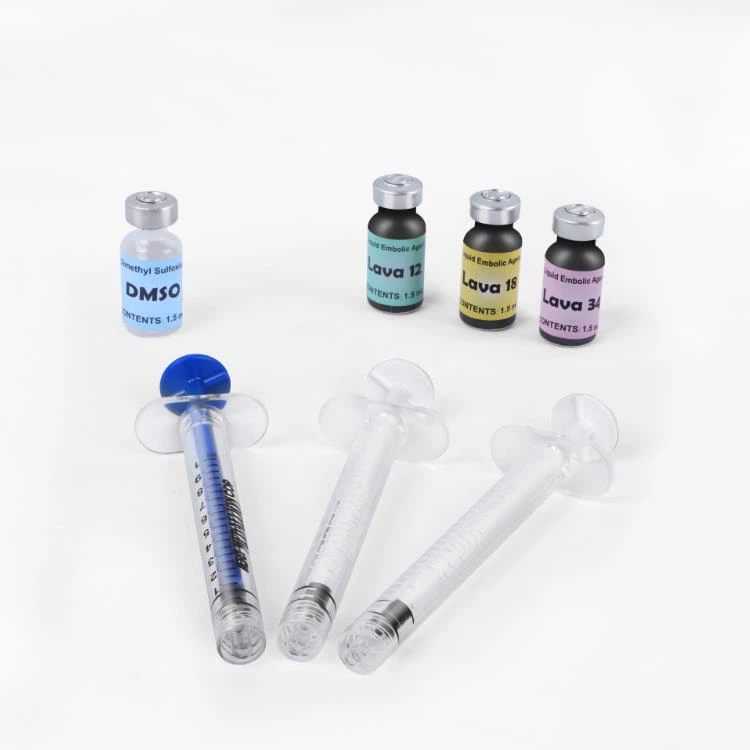
Lava embolic glue is a medical device used by interventional neuroradiologists during minimally invasive procedures to treat conditions such as cerebral aneurysms, arteriovenous malformations and tumors. The Lava embolic glue offers multiple benefits to medical professionals and patients alike in terms of safety, ease of use and effectiveness. Lava is able to seal off blood vessels quickly and efficiently. The process involves injecting the glue directly into the targeted vessel, where it polymerizes and hardens into a cast-like mass that fills the aneurysm or malformation. Then it effectively cuts off the blood flow to the lesion, preventing it from rupturing and reducing the risk of permanent damage or stroke.
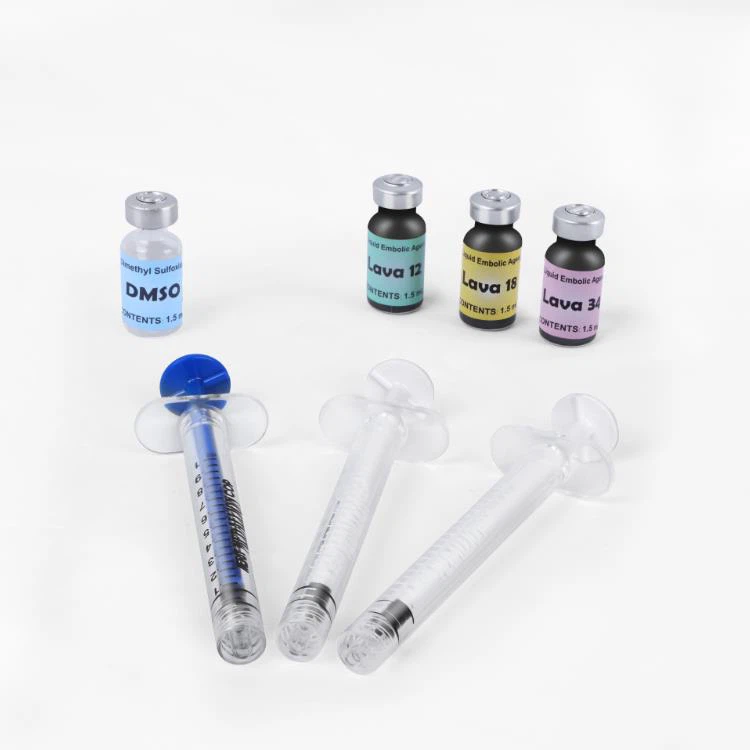
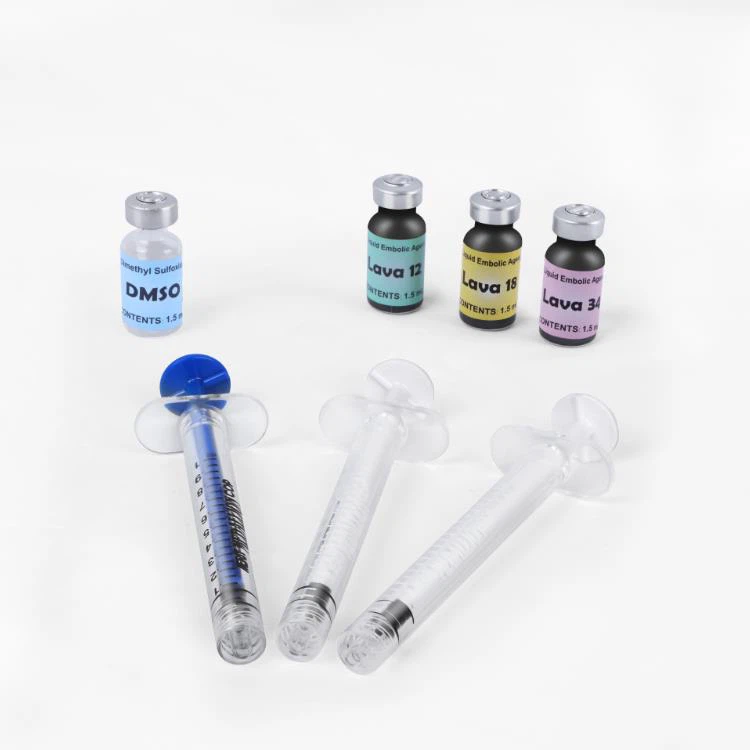
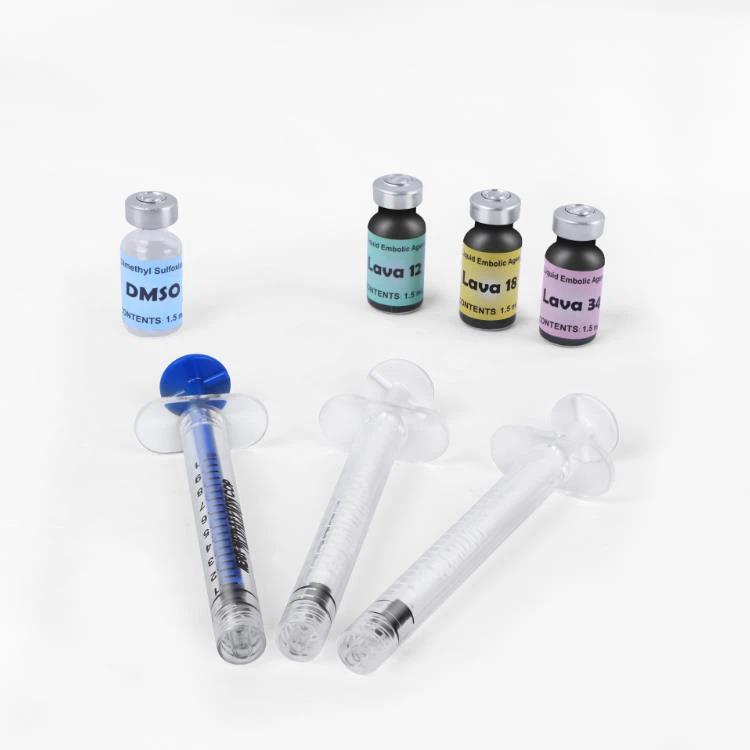
LavaTM embolic glue is a medical device used by interventional neuroradiologists during minimally invasive procedures to treat conditions such as cerebral aneurysms, arteriovenous malformations and tumors. The Lava embolic glue offers multiple benefits to medical professionals and patients alike in terms of safety, ease of use and effectiveness. Lava is able to seal off blood vessels quickly and efficiently. The process involves injecting the glue directly into the targeted vessel, where it polymerizes and hardens into a cast-like mass that fills the aneurysm or malformation. Then it effectively cuts off the blood flow to the lesion, preventing it from rupturing and reducing the risk of permanent damage or stroke. Lava includes Lava-12, Lava-18 and Lava-34. Each formulations are designed to meet specific clinical needs. Lava-18 is standard formulation for general use. Lava-34 is high-viscosity glue for high flow vessels. While Lava-12 has a lower viscosity and is more flowable, allowing for distal microvessles. With these options, interventional neuroradiologists can choose the suitable Lava formulations to ensure optimal outcomes. One of the most remarkable features of Lava is its non-adhesive properties. This substance is specially formulated to remain stable until it reaches the targeted area. This characteristic means that Lava embolic glue can be accurately placed within the artery and remain there without sticking or bonding to the surrounding tissue.
Features &Advantages
1. The stable controlled injection and delivery method of embolic glue is characterized by several key features. First, it requires a high level of precision in the placement of the embolic glue. The glue must be delivered in a controlled and targeted way to ensure that it is placed in the intended location. To achieve this, the delivery system must be capable of fine adjustments and precise positioning. Second, embolic glue must be delivered at a controlled rate and with consistent pressure to ensure that it is applied evenly and does not leak into unwanted areas.
2. One of the key features of embolic glue is that it is a non-adhesive material. This means that once it is injected into the bloodstream, it will not stick to any surrounding tissue or organs. The latest technology in embolic glue involves the use of EVOH co-polymer. it is able to withstand high levels of pressure and flow within the bloodstream. This means that the glue can effectively block even large or heavily trafficked blood vessels without breaking down or slipping out of place.
3. Lava provides the user with excellent visibility during surgical procedures. This means that surgeons can easily see where the glue has been applied and can ensure that it is properly sealing off the blood vessel. This level of visibility can be particularly helpful in complex surgeries where there are many different blood vessels that need to be sealed off.
4. Enhanced fluidness is a unique characteristic of embolic glue. This means that the adhesive is able to flow easily through even the smallest of blood vessels, allowing for precise placement and effective closure of the vessel. This feature is particularly useful in procedures where the target vessel is located in hard-to-reach areas or has complex branching patterns.