DEFIBRILLATOR
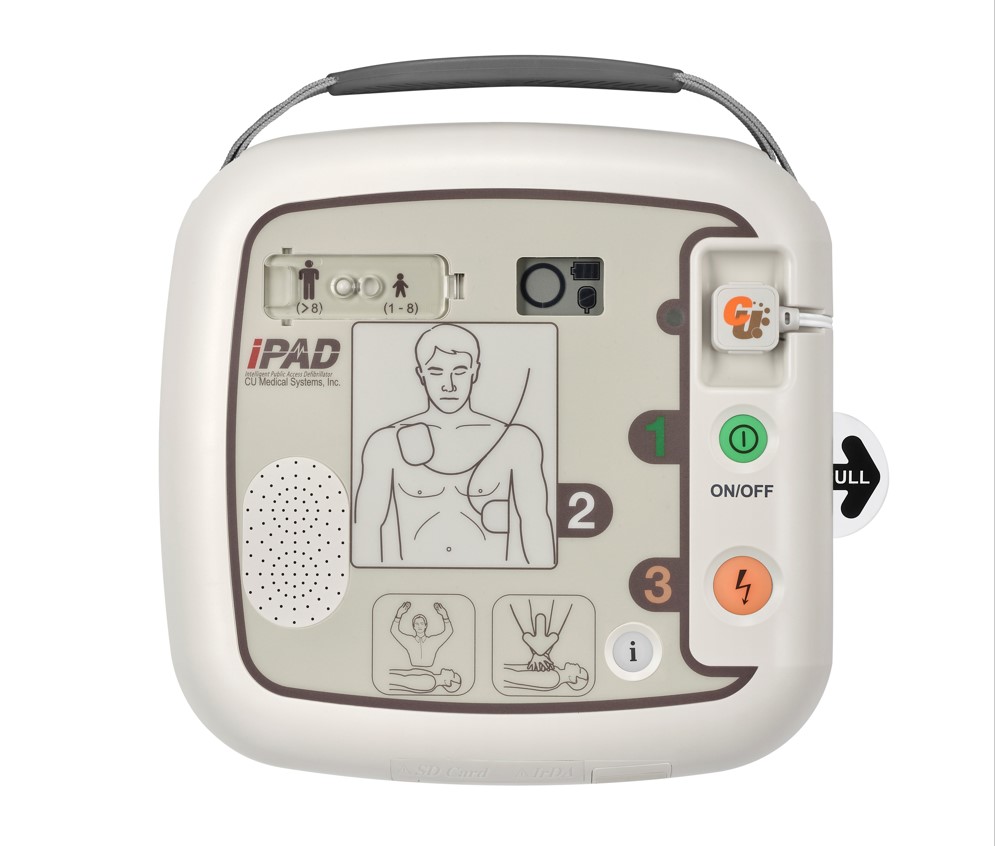
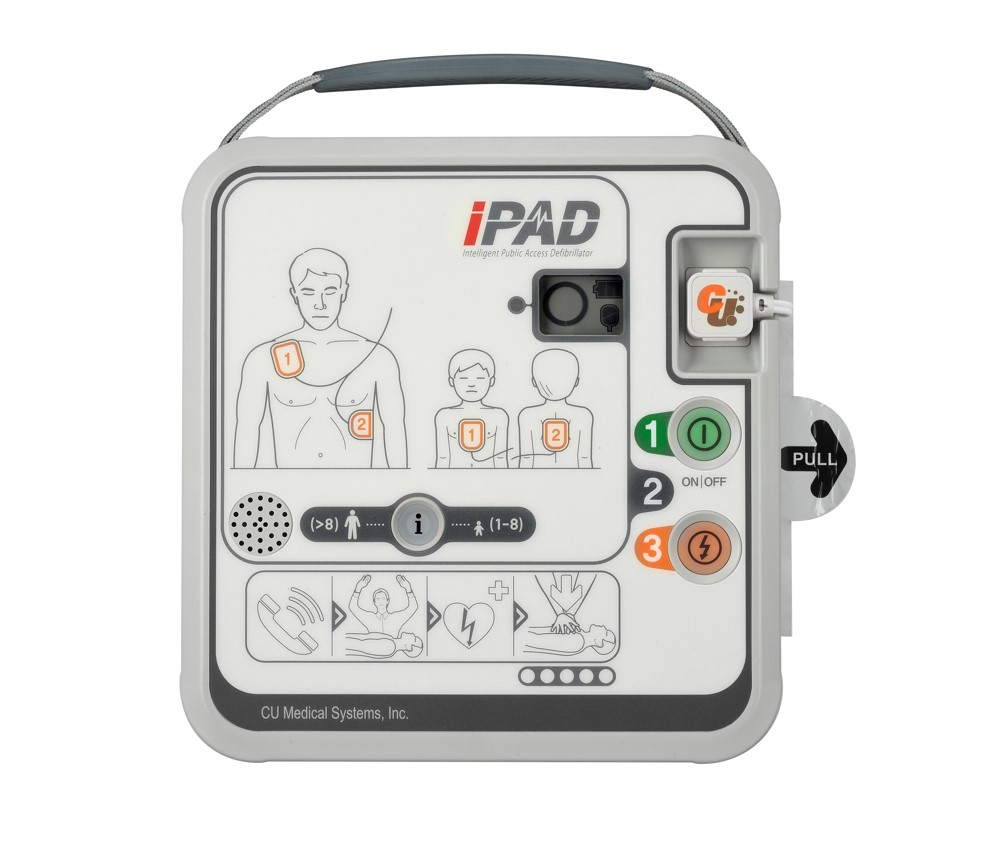
NFK200
Physical
Dimensions
- 260㎜ x 220㎜ x 70㎜ (Width x Length x Height)
Weight
- 2.2㎏ (Including the battery pack and pads)
Environmental
Operating Conditions
- Temperature: 0℃ ~ 50℃ (32℉ ~ 122℉)
- Humidity: 5 % to 95 % (non-condensing)
Storage Conditions
- Temperature: 0℃ ~ 50℃ (32℉ ~ 122℉)
- Humidity: 5 % to 95 % (non-condensing)
Transport Conditions
- Temperature: -20℃ ~ 60℃ (-4℉ ~ 140℉)
- Humidity: 5 % to 95 % (non-condensing)
Altitude
- 0 to 4,572 m (0 to 15,000 ft.)
Drop
- Withstands 1.2-meter drop to any edge, corner, or surface
Vibration
- Operating: Meets MIL-STD-810G Fig.514.6E-1,
- Standby: Meets MIL-STD-810G Fig.514.6E-2
Sealing
- IEC 60529:2013 IP42
ESD
- Meets IEC 61000-4-2:2008
EMI (Radiated)
- Meets IEC 60601-1-2 limits, CISPR: 2009+A1:2010, Group 1, Class B
EMI (Immunity)
- Meets IEC 60601-1-2 limits, method EN 61000-4-3:2006 +A2:2010 Level 3
Defibrillator
Operating Mode
- Semi-automated
Waveform
- E-cube biphasic (Truncated exponential type)
Output Energy
- 150 J at 50 Ω load for adults
- 50 J at 50 Ω load for children
Charge Control
- Controlled by an automated patient analysis system
Charging Time
- Within 3 seconds from when the voice instruction, "An electric shock is needed" is issued.
Time from initiation of rhythm analysis
- 10 seconds with a new battery (even after the delivery of 15discharges at 150J)
- 12 seconds with a new battery (even after the delivery of 15 discharges at 200J)
Time from Power on to readiness for discharge
- 25 seconds with a new-fully charged battery (even after the delivery of 15 discharges at maximum energy)
Time from CPR to Shock
- At least 6 seconds from the completion of CPR to shock delivery
Disarm
- Patient’s heart rhythm changes to non-shockable rhythm
- The SHOCK button is not pressed within 15 seconds
ECG Analysis System
• ECG Analysis System
Impedance Range
- 25Ω to 175Ω
Shockable Rhythms
- Ventricular Fibrillation or Fast Ventricular Tachycardia
Sensitivity and Specificity
- Satisfies AAMI DF39
• ECG Acquisition
Acquired ECG Lead
- Lead II
Frequency Response
- 1 Hz to 30 Hz
Controls, Indicators, and Prompts
Controls
- Power Button
- Shock Button
- Adult/Pediatric Selection Button
Indicators
- Do-Not-Touch-Patient
- Pads Patch Position Indicators
- Status LED Indicator
- CPR Step and Detection Indicator
- Shock Button
Speaker
- Provides voice prompts
Sound Level
- 80dB ~ 90dB (±3dB), apart 1m above speaker
Beeper
- Provides various audible indications
Low Battery Indicator
- Shown on the Status LED, announced via voice instruction
Self-Test
Automatic
- Power On Self-Test, Run-time Self-Test
- Daily, Weekly, and Monthly Self-Test
Manual
- Battery Pack Insertion Test
Battery Pack
• Battery Pack (Standard Life)
Battery Type
- 12V DC, 2.8 Ah LiMnO2, Disposable
Capacity
- At least 40 (200J) shocks for a new battery or 2 hours of operating time
Standby Life
- At least 2 years from the date of manufacture
Temperature Ranges
- Operating Temperature: 0℃ ~ 50℃ (32℉ ~ 122℉)
- Storage Temperature: -20℃ ~ 60℃ (-4℉ ~ 140℉)
• Battery Pack (Long Life)
Battery Type
- 12V DC, 4.2Ah LiMnO2, Disposable
Capacity
- 200 Joules - At least 150 shocks for a new battery or 6 hours of operating time
Standby Life
- At least 5 years from the date of manufacture
Temperature Ranges
- Operating Temperature: 0℃ ~ 50℃ (32℉ ~ 122℉)
- Storage Temperature: -20℃ ~ 60℃ (-4℉ ~ 140℉)
Adult / Pediatric Defibrillation Pads
Surface Area
- 85 cm²
Cable Length
- 120 cm
Shelf Life
- At least 36 months from the date of manufacture
Data Storage and Transfer
USB
- External memory. Data may be copied from the internal memory to the USB.
File System
- FAT32
Internal Memory Data Capacity
- 5 individual treatments, up to 3 hours per treatment
Accessories
• Standard Package
Device(1), Adult / Pediatric pads(1), Disposable battery(1), Carrying case(1), ), User’s manual(1)